Poultice
2026
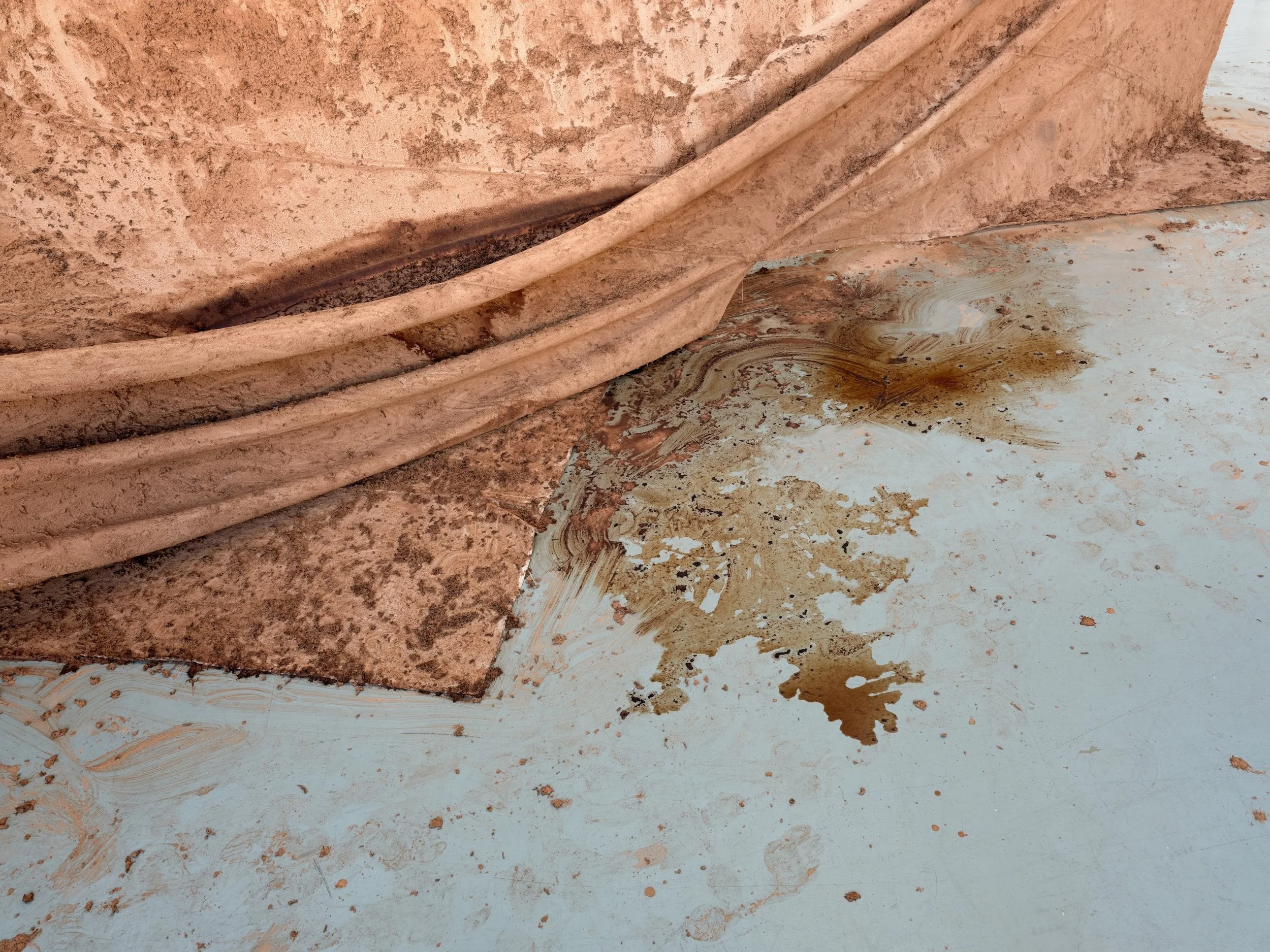
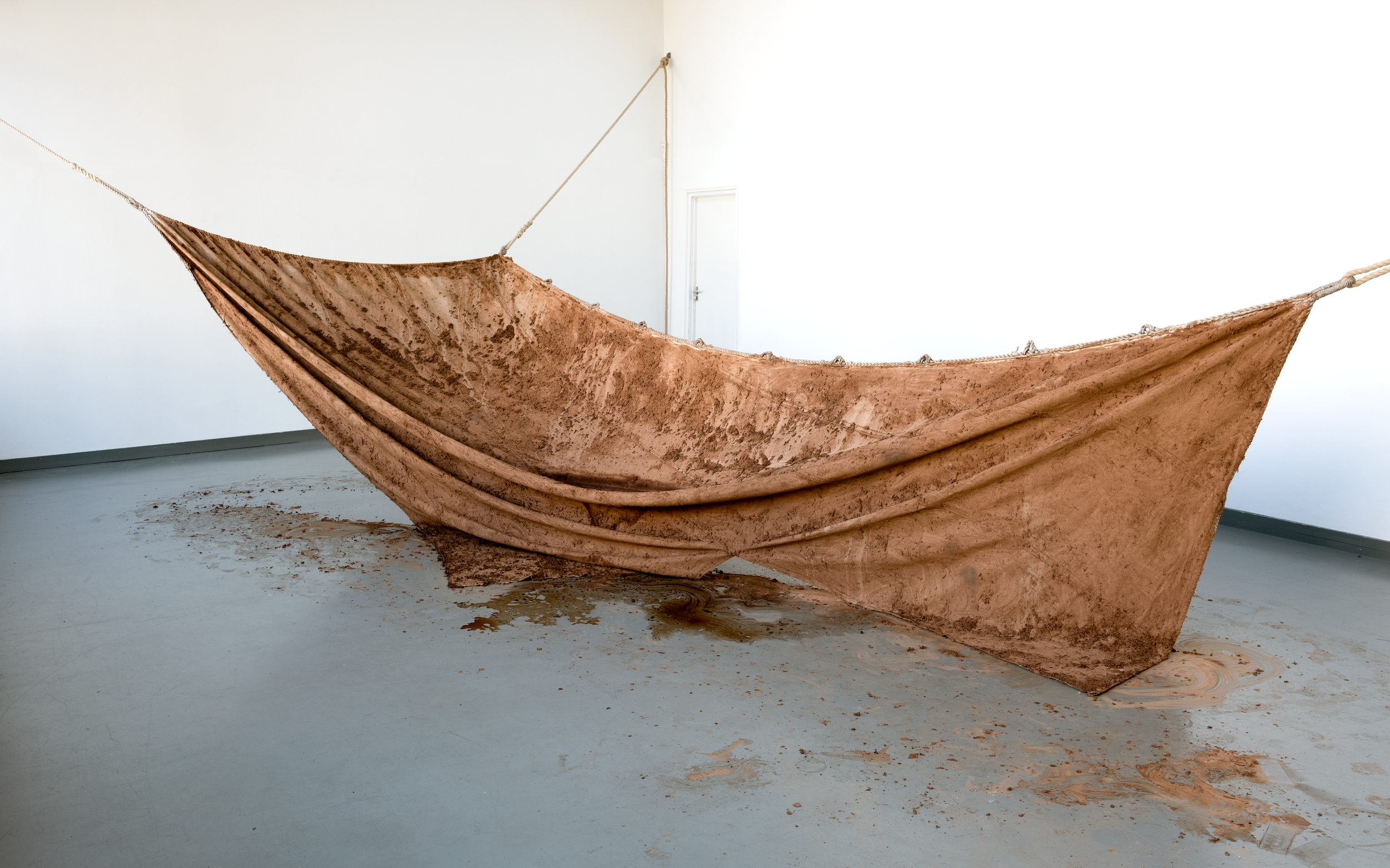
Sloop mainsail from Museum Batavialand†
Cinnamon from Sri Lanka (1 kg)*
Black pepper from India (906 g)*
Ginger from India (453 g)*
Turmeric from India (500 g)*
Cardamom from India and Guatemala (240 g)*
Nutmeg from Indonesia (1 kg)*
Cloves from Indonesia (906 g)*
Tate & Lyle Unrefined Demerara cane sugar (500 g)‡
Cane sugar from Jamaica (500 g)
American Spirit tobacco from the United States (300 g)
Coffee from Ethiopia (500 g)*
Coffee from Colombia and Indonesia (500 g)*
Green tea from China (906 g)*
Cocoa from West Africa and Latin America (1 kg)*
Saltwater from the North Sea
Glass jars
Metal bowl
Cotton rag
Hempex rope
Hemp twine
Steel pad-eye rings
† Sloops were smaller boats used to ferry goods between the ship and the shore. This replica mainsail is from the sloop of the reconstructed Batavia, a Dutch East India Company (VOC) ship that left Texel, Netherlands in 1628 for the Dutch East Indies with a mission to obtain spices. The sail was handmade in the sailmaker’s workshop at the shipyard of Museum Batavialand in Lelystad, Netherlands.
* Fairtrade and organic
‡ Demerara is a style of brown cane sugar named for the Demerara region of present-day Guyana. The current country of origin of this Fairtrade Tate & Lyle sugar could not be verified.
Dimensions vary
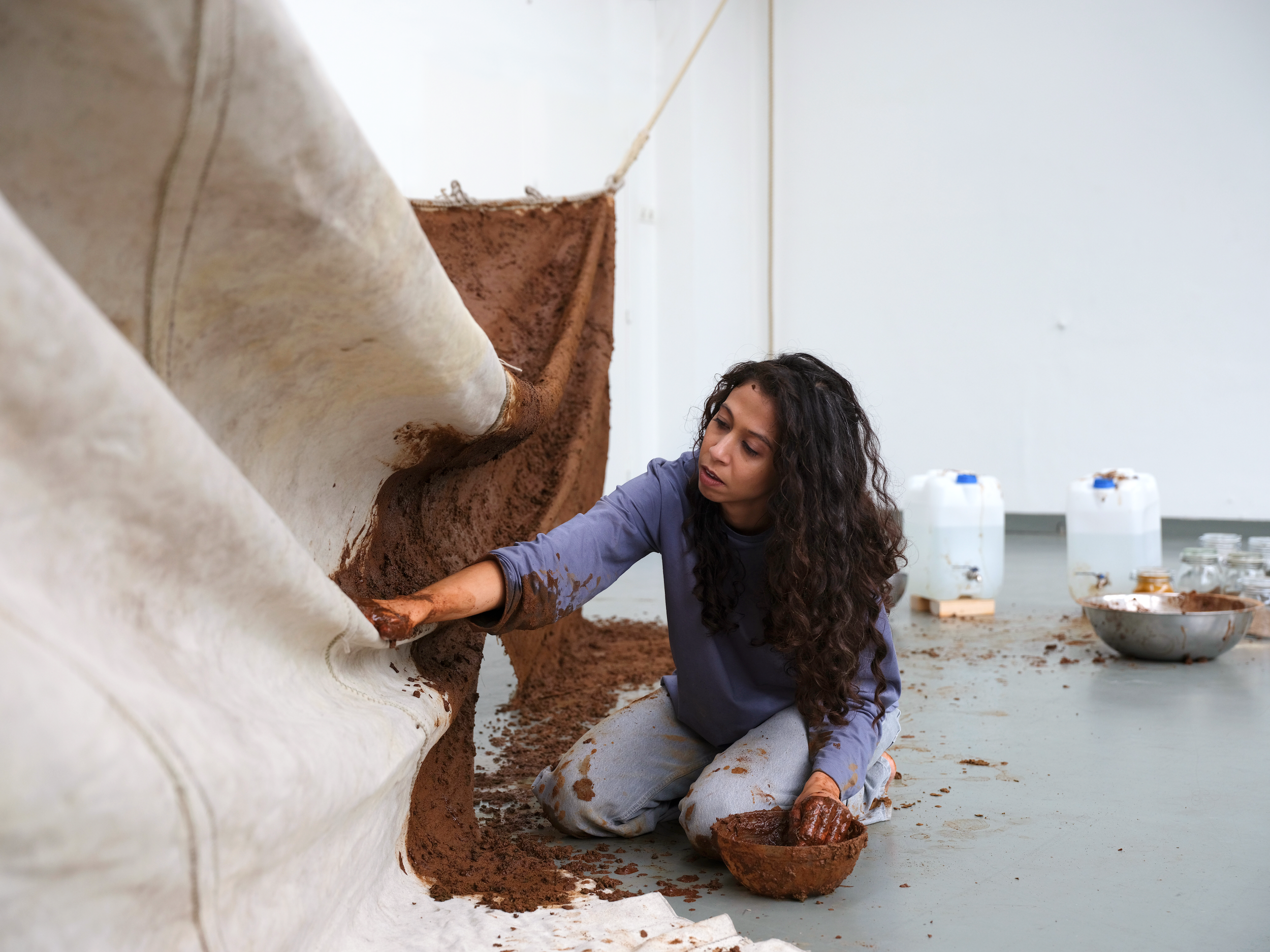
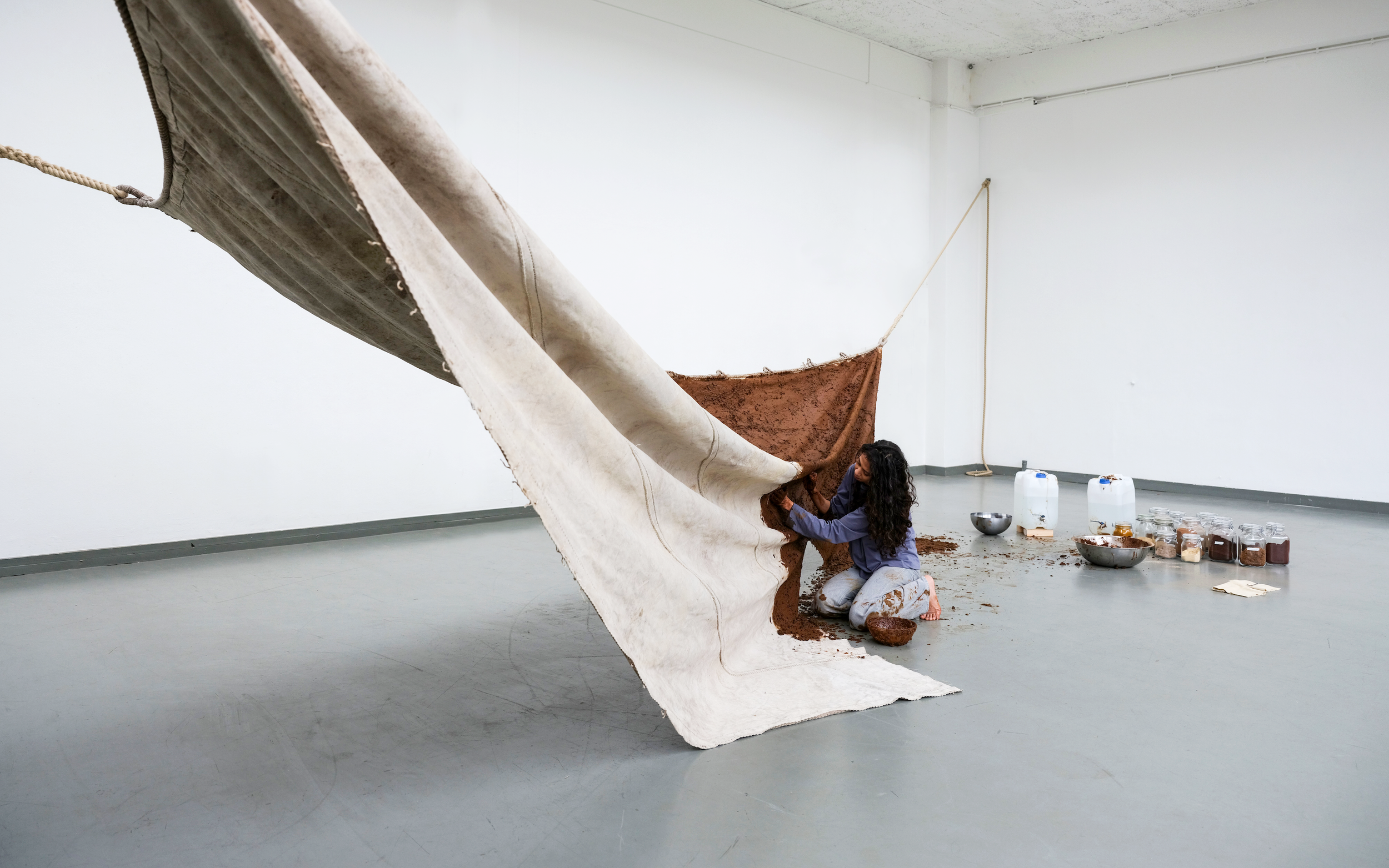
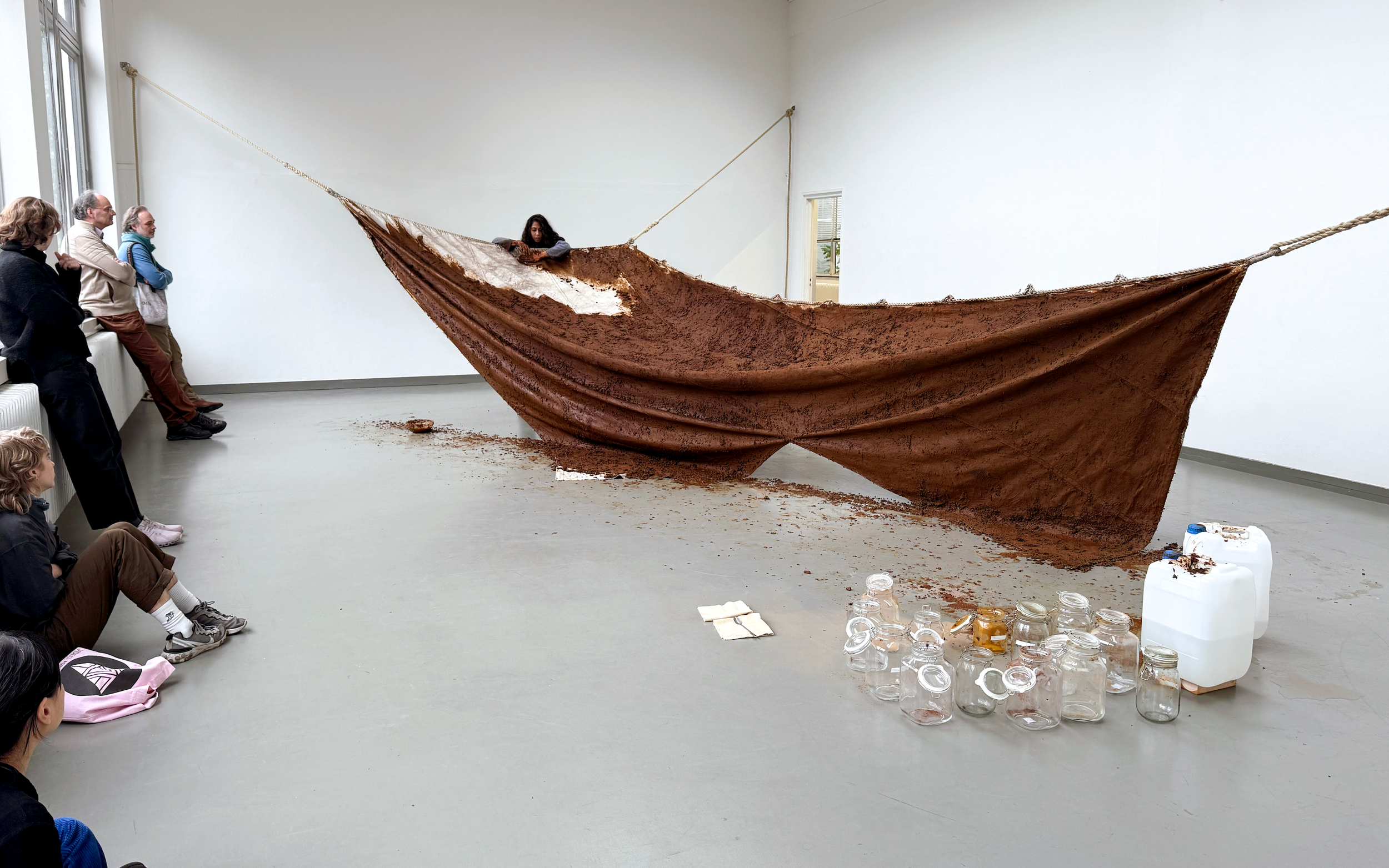
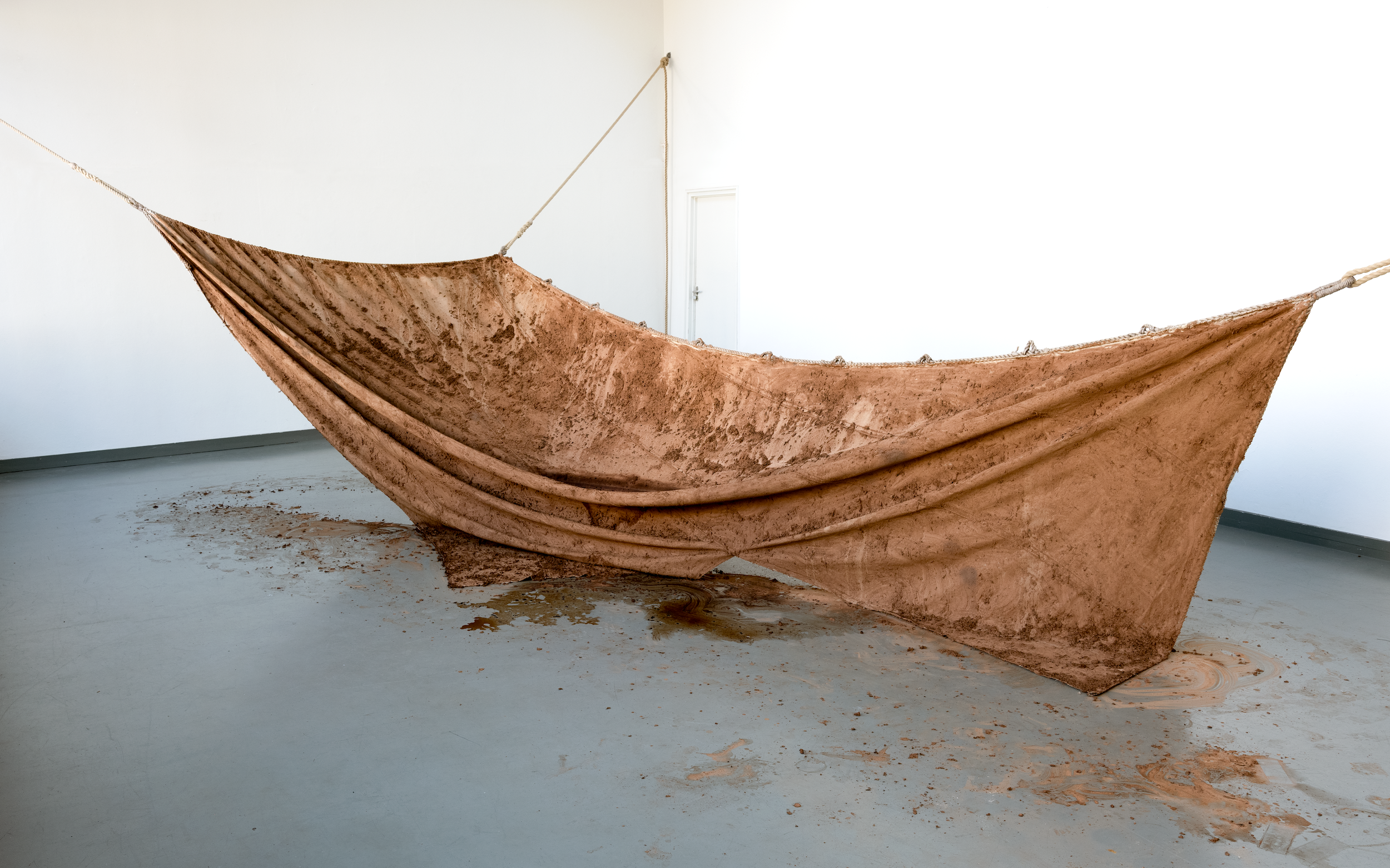
In this activation ritual and installation, I worked with replica of a 17th-century style Vereenigde Oostindische Compagnie (VOC) sail from the shipyard at Museum Batavialand. I rubbed the linen by hand with sugar, black pepper, cinnamon, and other spices—materials extracted through violence, yet used for centuries as medicine and ritual. Drawing on the plant-based healing traditions my family carried from the Caribbean and as indentured laborers from India, I worked the spice mixture into the sail like a treatment on a wound. It's a gesture that slowly transforms this maritime symbol into one that contends with the enduring weight of colonial history.
This project was supported by the Netherland-America Foundation